Manufacturing Automation Strategies to Reduce Costs and Increase Output
Manufacturers rarely struggle because they lack ideas. More often, they struggle because improvement efforts get scattered. One team wants new robots. Another wants better reporting. Maintenance asks for sensors. Finance wants labor savings inside the current budget year. Operations wants more throughput next quarter, not next spring.
That tension is exactly why manufacturing automation needs to be approached as a business system, not a shopping list. The plants that reduce cost and increase output most reliably are not always the ones with the newest equipment. They are usually the ones that automate the right constraints, connect decisions to data, and avoid solving one bottleneck by creating another.
I have seen facilities spend heavily on equipment that looked impressive during commissioning but delivered very little once the line settled into normal production. I have also seen older plants make meaningful gains with modest investments, simply by automating repetitive tasks, improving machine coordination, and giving operators better visibility into stoppages. The difference almost always comes down to strategy.
Start with the real source of lost output
Every plant says it wants more efficiency. That is too vague to guide investment. Before evaluating industrial automation solutions, identify where output is actually being lost and where costs are truly accumulating.

In a typical factory, the biggest losses tend to cluster around a few familiar problems. Unplanned downtime erodes capacity in chunks. Minor stops erode it minute by minute. Manual handling creates waiting time between steps. Changeovers stretch longer than planned because machine settings are not repeatable. Quality defects force rework, scrap, or slower operating speeds. Poor line balance causes one process to starve while another overproduces. These issues are rarely solved by one device or one software package.
A packaging line offers a useful example. A plant manager may assume the filler is the problem because that machine is large, expensive, and visible. But once data is captured at each station, it may become clear that the real issue is accumulation collapse near the labeler, followed by operators manually clearing bottle jams at the case packer. In that case, replacing the filler will not improve output much. Better machine synchronization, conveyor control, and fault recovery logic might.
This is where factory automation pays off fastest. It exposes the difference between what people think is happening and what is actually limiting performance.
The strongest automation projects target constraints, not conveniences
Automation can make work easier. It can also make bad process design happen faster. That is why the first question should not be, “What can we automate?” It should be, “What is the constraint that most limits profitable output?”
If the constraint is a slow manual assembly cell, robotic handling or semi-automated tooling may create an immediate lift. If the constraint is variability in upstream process conditions, then sensors, closed-loop control, and recipe management may be more valuable than a robot. If downtime is driven by delayed maintenance response, the better investment might be condition monitoring tied to alarm prioritization.
Plants sometimes choose projects based on visibility rather than impact. A robotic palletizer is easy to show visitors. It may even help with labor availability, which is a valid reason to proceed. But if the true economic loss comes from unstable process temperatures in a critical line, then process control improvements deserve priority.
The best industrial automation strategies begin with a hard look at throughput, labor, scrap, downtime, and energy by process step. Only then does the equipment conversation become useful.
Where cost reduction usually comes from
People often frame manufacturing automation as a labor reduction story. Labor matters, but in practice the PLC programming savings are broader and often more durable than headcount alone.
A well-designed automation systems upgrade typically reduces cost in at least four ways. First, it lowers direct labor content or redeploys labor to higher-value work such as quality checks, material replenishment, or changeovers. Second, it reduces scrap and rework by making process conditions more consistent. Third, it cuts downtime by improving machine response, diagnostics, and maintenance planning. Fourth, it improves asset utilization, which lowers the cost per unit because fixed costs are spread across more output.
Energy can also become a meaningful factor, especially in facilities with heavy motors, compressed air consumption, thermal processes, or extensive idle running. A line that stops and starts poorly often wastes more energy than management realizes. Sequenced shutdowns, variable frequency drives, and tighter control logic can reduce that waste without affecting production.
One metals processor I worked with focused initially on labor because overtime costs were drawing attention. Once line data was collected, the bigger issue turned out to be scrap created during ramp-up after short stoppages. The process would drift out of tolerance for several minutes, and operators had grown used to treating that as normal. After improving automation around setpoint recovery and machine-to-machine coordination, the plant reduced scrap enough to justify the project even before labor savings were counted.
That pattern is common. The visible cost is not always the dominant cost.
Build around data you can trust
Many plants still make automation decisions using a mix of operator feedback, shift reports, and maintenance memory. Those inputs matter, but they are incomplete. Different shifts interpret the same issue differently. Downtime reasons get entered inconsistently. Production counts may not reconcile with quality records. Once that happens, debate replaces analysis.
Reliable data does not require a massive digital transformation effort. In many cases, the first step is simply to collect machine state, cycle time, fault codes, throughput, and reject counts consistently across the line. Add time stamps, track changeover windows, and separate planned from unplanned stops. That alone can change the quality of decision-making.
When plants adopt industrial automation solutions with stronger data capture, they often discover two useful truths. The first is that their major losses are more concentrated than expected. The second is that small recurring interruptions can be more damaging than rare catastrophic failures. A machine that stops for forty seconds twenty times per shift can hurt output more than a single ten-minute breakdown, especially if each restart requires manual intervention.

Supervisors know this intuitively. Automation systems make it measurable.
Focus on repeatability before speed
There is a temptation in manufacturing automation projects to chase maximum machine speed. That usually makes for a poor first objective. Repeatability is more valuable than raw speed because unstable processes create hidden costs everywhere else.
A line running at 85 percent of theoretical speed with tight consistency will usually outperform a line that occasionally hits 100 percent but constantly suffers jams, resets, and quality escapes. Operators can plan around stable output. Scheduling can trust it. Maintenance can support it. Customers benefit from it.
This is especially true in food processing, pharmaceuticals, automotive components, and any environment where traceability or compliance matters. The more demanding the quality requirement, the more expensive process variation becomes.
Good automation strategy therefore starts by locking in control over the critical variables. That could mean torque verification in assembly, vision-based inspection in packaging, temperature and pressure control in processing, or automatic adjustment for material variation in converting operations. Once the process behaves consistently, speed improvements become safer and more valuable.
The automation architecture matters more than many plants expect
Technology choices are not just a procurement matter. Architecture affects long-term cost, uptime, training burden, and future expansion.
A plant with five different control platforms across adjacent lines will pay for that complexity repeatedly. Spare parts inventories grow. Troubleshooting gets slower. Training becomes fragmented. Integration work takes longer. Vendors blame one another. None of this shows up clearly in an equipment quote, but it shows up every year in support costs and operational friction.
Standardization is one of the most underrated forms of cost reduction in factory automation. That does not mean forcing every area into the same template regardless of need. It means choosing preferred platforms, naming conventions, network standards, HMI principles, alarm philosophies, and documentation practices so that systems can be maintained by your own team, not just by the integrator who built them.
I have seen plants lose hours because one line displays faults by device number while another uses plain-language diagnostics. That sounds minor until a night-shift technician is trying to restore production at 2:30 a.m. Consistency in automation systems is operational leverage.
Where robotics fit, and where they do not
Robotics remain one of the most visible forms of industrial automation, and for good reason. For repetitive motion, high-speed handling, hazardous environments, and ergonomically difficult tasks, robots can deliver strong returns. Palletizing, machine tending, pick-and-place, welding, dispensing, and inspection are common examples.
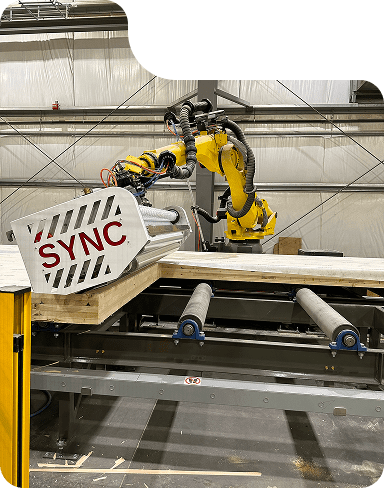
Still, robotics are not automatically the best route to higher output. They require stable upstream and downstream conditions. A robot cell fed by inconsistent part orientation, variable material quality, or frequent line interruptions may spend too much time waiting or faulting. In those cases, the plant should first stabilize process flow.
There is also a practical distinction between replacing labor and protecting throughput. If labor turnover is high, a robot may create value by reducing staffing risk even if the cycle time improvement is modest. If the line already has adequate staffing but suffers frequent starved conditions, robotic investment may not address the true issue.
The strongest robotic applications share three traits. The task is repetitive, the inputs are controlled, and the surrounding process can support the robot’s operating rhythm.
Changeovers are often the quiet killer
Plants love to talk about uptime, but changeover performance often deserves equal scrutiny. If a line changes product, packaging, size, or formulation frequently, then every minute of changeover time matters. In high-mix manufacturing, reducing changeover duration and variation can raise effective capacity far more than increasing rated machine speed.
Automation helps here in practical ways. Servo-driven adjustments can replace manual mechanical settings. Recipe management can load validated parameters automatically. Vision systems can confirm tooling and component setup. Guided HMI workflows can reduce setup error. Data logging can show which part of the changeover consistently takes too long.
A consumer goods facility I visited had invested in faster downstream machinery while continuing to manage upstream settings with handwritten sheets and operator memory. The line looked advanced on one end and improvised on the other. Once the team automated recipe selection and standardized setup verification, changeovers became shorter and far more repeatable. The throughput gain was larger than what they had achieved from the machine-speed upgrade.
That is a useful reminder. Not every automation win comes from more motion. Many come from fewer mistakes.
Maintenance should be part of the design, not an afterthought
A lot of automation projects underperform because maintenance was invited too late. Controls engineers and integrators may create a technically capable system that is difficult to service in a real production environment. Sensors are placed where they are hard to access. Fault trees are shallow. Alarm floods obscure root causes. Replacement parts require special programming knowledge. None of that helps the plant at 3:00 a.m. During a breakdown.
Maintenance involvement improves project quality in very practical ways. Technicians can flag wear points, contamination risks, access limitations, and likely failure modes that designers may miss. They also know which diagnostics are truly useful and which are just nice to have.
The result should be automation systems that not only run well but fail gracefully, signal clearly, and recover quickly. That includes meaningful fault messages, standardized I/O naming, easy backup procedures, and spare-part strategies that fit the site’s actual response capability.
A healthy rule is simple: if the plant cannot support the system without calling for outside help every time something unusual happens, then the design is too dependent on external expertise.
A phased approach usually beats a grand rollout
The appeal of a sitewide transformation is obvious. Standardize everything, digitize everything, modernize everything. In practice, large automation programs often stall because they overload internal teams, tie up capital, and delay visible results.
A phased strategy tends to work better. Target the line or process with the clearest economics, prove the gain, refine the deployment model, then expand. That allows the plant to learn what its own people can absorb, which vendors execute reliably, and where the hidden integration issues live.
The first wave should not necessarily be the most ambitious project. It should be the one most likely to deliver measurable, defensible value within a reasonable window. That usually means a process with enough pain to matter and enough stability to implement without chaos.
The most effective sequence often looks like this:
- Measure current performance at the constraint with credible baseline data.
- Automate the highest-impact source of delay, variation, or manual handling.
- Stabilize the process and train operators and maintenance thoroughly.
- Verify the gains against output, scrap, downtime, and labor metrics.
- Replicate the approach where process conditions are similar.
That pattern may seem conservative, but it avoids a common trap: rolling out complex industrial automation solutions across multiple areas before the first one has proven sustainable.
The human side determines whether gains stick
Automation does not eliminate the need for people. It changes where people create value. Plants that understand this tend to get more from their investments.
Operators need interfaces that support fast decisions, not crowded screens full of unlabeled status lights. Supervisors need production data they can trust during the shift, not only in the next morning’s report. Maintenance teams need training that reflects likely fault scenarios, not just the ideal startup sequence shown during commissioning. Engineers need documentation that can be used months later, not only on handover day.
Resistance to automation is often less about fear of technology and more about prior bad experiences. If a new system made the job harder last time, crews will be skeptical this time. Good change management is therefore practical, not ceremonial. Involve users early. Let experienced operators test workflows before startup. Capture nuisance alarms quickly. Adjust HMI wording to the plant’s language, not the integrator’s.
One of the best commissioning habits I have seen is keeping a running list of operator frustrations during the first two weeks, then resolving the high-frequency issues quickly. That builds confidence and prevents the system from being worked around.
What to evaluate before approving a project
A solid automation business case goes beyond purchase price and labor assumptions. It should consider the full operating impact, including implementation disruption, line integration risk, training needs, spare parts, software support, and expected learning curve. It should also distinguish between hard savings and capacity gains. More output only creates value if the business can sell it or use it to relieve another bottleneck.
Before approving a project, leaders should be able to answer a short set of questions:
- What exact loss are we attacking: downtime, labor, scrap, changeover time, safety risk, or throughput constraint?
- What baseline data proves the size of that loss today?
- What process assumptions must remain true for the projected savings to hold?
- Can our site maintain and troubleshoot the system after startup?
- How will we verify results ninety days after commissioning?
These questions sound straightforward, yet they prevent a surprising number of weak projects from moving forward for the wrong reasons.
Matching strategy to plant reality
There is no single model for manufacturing automation because plant realities differ. A high-volume beverage line, a job shop, an automotive stamping plant, and a pharmaceutical packaging area do not share the same economics, labor model, or tolerance for downtime. The right strategy depends on product mix, customer demand, workforce stability, existing equipment, and the maturity of current controls.
In lower-volume, higher-mix operations, flexible automation often beats highly specialized automation. In very high-volume settings, dedicated systems can justify themselves through speed and repeatability. In labor-constrained regions, projects that improve staffing resilience may deserve priority even if the pure efficiency case is moderate. In energy-intensive industries, process optimization may outrank material handling automation.
That is why the strongest factory automation plans are not built from trends. They are built from local constraints, local economics, and local capability.
When plants get this right, the results are rarely flashy in day-to-day conversation. The line simply runs with fewer interruptions. Changeovers become less stressful. Scrap drops. Overtime eases. Operators spend less time fighting the equipment and more time managing production. Maintenance moves from reactive scrambling to targeted intervention. Output rises, unit cost falls, and the gains hold because they are grounded in process reality.
That is what effective industrial automation looks like in practice. Not technology for its own sake, but automation that removes friction from the factory where it matters most.
Sync Robotics Inc. — Business Info (NAP)
Name: Sync Robotics Inc.
Address: 2-683 Dease Rd, Kelowna, BC V1X 4A4
Phone: +1-250-753-7161
Website: https://www.syncrobotics.ca/
Email: [email protected]
Sales Email: [email protected]
Hours:
Monday: 8:00 AM – 4:30 PM
Tuesday: 8:00 AM – 4:30 PM
Wednesday: 8:00 AM – 4:30 PM
Thursday: 8:00 AM – 4:30 PM
Friday: 8:00 AM – 4:30 PM
Saturday: Closed
Sunday: Closed
Service Area: Kelowna, British Columbia and across Canada
Open-location code (Plus Code): VHWR+PQ Kelowna, British Columbia
Map/listing URL: https://maps.app.goo.gl/xwtV2wEu8ZuKH3se8
Embed iframe:
Socials (canonical https URLs):
LinkedIn: https://www.linkedin.com/company/syncrobotics/
Instagram: https://www.instagram.com/syncrobotics/
Facebook: https://www.facebook.com/syncrobotics/
https://www.syncrobotics.ca/
Sync Robotics Inc. is an industrial robot and controls integration company based in Kelowna, British Columbia.
The company designs and deploys automation solutions for manufacturing operations across Canada.
Services include industrial robotics integration, controls integration, automation system design, deployment support, and related manufacturing automation solutions.
Sync Robotics Inc. is located at 2-683 Dease Rd, Kelowna, BC V1X 4A4.
To contact Sync Robotics Inc., call +1-250-753-7161 or email [email protected].
For sales inquiries, email [email protected].
Hours listed are Monday to Friday 8:00 AM–4:30 PM, with Saturday and Sunday closed.
For directions and listing details, use the map listing: https://maps.app.goo.gl/xwtV2wEu8ZuKH3se8
Popular Questions About Sync Robotics Inc.
What does Sync Robotics Inc. do?
Sync Robotics Inc. designs and deploys industrial robot and controls integration solutions for manufacturing operations.
Where is Sync Robotics Inc. located?
Sync Robotics Inc. is located at 2-683 Dease Rd, Kelowna, BC V1X 4A4.
Does Sync Robotics Inc. serve clients outside Kelowna?
Yes—Sync Robotics Inc. is based in Kelowna, British Columbia and serves clients across Canada.
What are Sync Robotics Inc.’s hours?
Monday–Friday: 8:00 AM–4:30 PM; Saturday and Sunday closed.
How can I contact Sync Robotics Inc.?
Phone: +1-250-753-7161
General Email: [email protected]
Sales Email: [email protected]
Website: https://www.syncrobotics.ca/
Map: https://maps.app.goo.gl/xwtV2wEu8ZuKH3se8
LinkedIn: https://www.linkedin.com/company/syncrobotics/
Instagram: https://www.instagram.com/syncrobotics/
Facebook: https://www.facebook.com/syncrobotics/
Landmarks Near Kelowna, BC
1) Kelowna International Airport
2) UBC Okanagan
3) Rutland
4) Orchard Park Shopping Centre
5) Mission Creek Regional Park
6) Downtown Kelowna
7) Waterfront Park
