How Dental Crowns Restore Teeth After Trauma
A traumatic dental injury rarely arrives at a convenient moment. It happens during a weekend basketball game, on a slippery front step, in a cycling crash, or after biting down on something unexpectedly hard. One second the tooth feels normal, the next it is cracked, shortened, painful, or visibly out of place. The urgency people feel is not only cosmetic. A damaged tooth can become sensitive, unstable, difficult to bite with, and vulnerable to deeper fractures or infection if it is not protected quickly.
Among the most reliable tools for restoring a traumatically injured tooth is the dental crown. When used at the right time and for the right reason, a crown can do far more than cover a damaged surface. It can brace weakened tooth structure, rebuild the bite, protect a tooth after root canal treatment, and return a smile to something that feels recognizably normal again. That said, crowns are not a one-size-fits-all answer. Trauma cases often demand careful timing, detailed imaging, and judgment about whether the tooth can be saved at all.
The practical value of dental crowns becomes clearer when you understand what trauma does to teeth in the first place, and why simple fillings are sometimes not enough.
What dental trauma actually does to a tooth
People tend to think of a broken tooth as a surface problem, but trauma can affect several layers at once. The visible enamel may chip cleanly, or it may crack in a way that runs into dentin, the softer inner structure beneath the enamel. In more severe cases, the nerve tissue inside the tooth, the pulp, becomes inflamed or dies after the impact, even if the outside damage looks modest at first glance.
A front tooth hit by a fall may lose a corner and remain stable. A molar that absorbs a sideways force may split a cusp, develop a hidden fracture line, and become painful only when chewing. Sometimes the trauma is immediate and obvious. Sometimes the more serious issue appears later, when the tooth darkens, grows increasingly sensitive to cold, or starts hurting under pressure weeks after the accident.
This is one reason trauma dentistry requires restraint. A quick cosmetic patch can be tempting, especially if the person wants the tooth to look acceptable for work or social reasons. But a repaired appearance is not the same as a mechanically sound tooth. If the remaining structure cannot handle normal chewing forces, the restoration may fail, and the tooth may lose more structure in the process.
Why crowns are often chosen after trauma
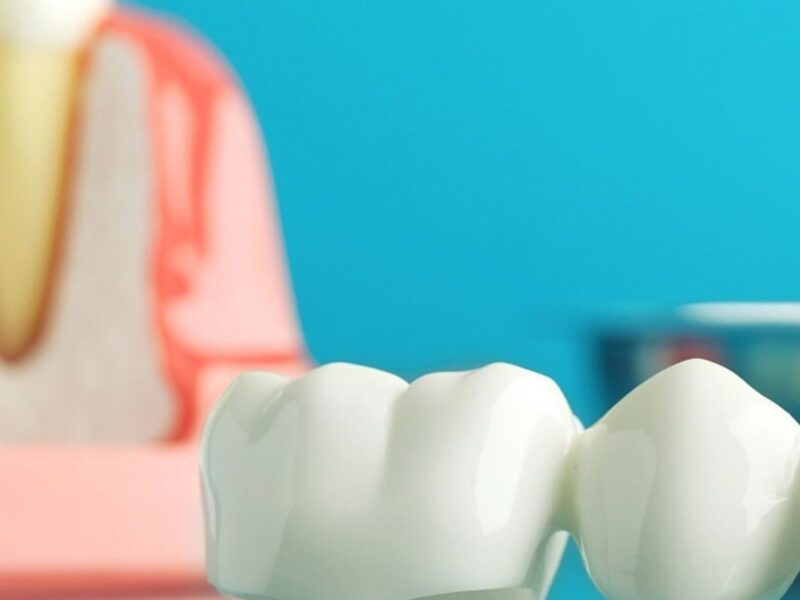
A dental crown is a full-coverage restoration, custom-made to fit over a prepared tooth. Unlike a small filling that replaces only a localized defect, a crown surrounds and protects most or all of the exposed clinical portion of the tooth above the gumline. That coverage matters when trauma has left the tooth weakened, brittle, or missing a substantial amount of structure.
In practice, crowns are commonly recommended after trauma in situations where the tooth can still be saved but no longer has the strength to function predictably on its own. A molar with a fractured cusp is a classic example. A filling might close the defect, but it may not stop the remaining tooth walls from flexing and breaking under chewing load. A well-designed crown can splint those walls together and distribute force more evenly.
The same principle applies after root canal treatment. Teeth that have suffered traumatic injury sometimes require endodontic therapy because the pulp has been irreversibly damaged. Once a tooth is root canal treated, especially a back tooth, it often becomes more prone to fracture over time because so much internal and external structure has already been lost. A crown does not reverse that history, but it can significantly improve the tooth’s chances of surviving daily function.
For front teeth, the role of a crown is more nuanced. Dentists try to preserve as much natural enamel as possible, particularly in younger patients. If a front tooth can be restored with bonding or a veneer while remaining strong, that is often preferable. But if trauma has caused a large fracture, previous repairs have failed, or the tooth has become discolored and structurally compromised, a crown may provide the most durable and esthetic result.
When a crown is the right restoration, and when it is not
A crown is not the default answer to every chipped or cracked tooth. Good treatment planning starts with the amount and location of remaining tooth structure, the health of the nerve, the position of the fracture line, the bite pattern, and the age of the patient.
In day-to-day practice, crowns make the most sense when the damage is significant but still restorable. That often includes teeth with large fractures above the gumline, teeth that have undergone root canal treatment after trauma, and teeth with multiple old restorations that were destabilized by the injury. If enough healthy tooth remains to support the crown, the prognosis can be very good.
There are important exceptions. If a fracture extends too far below the gumline or into the root, a crown may not solve the problem because there is not enough accessible tooth structure to hold it predictably. If the tooth is loose because the supporting bone and ligament have been severely damaged, stabilization and healing come first. If a young patient has a still-developing tooth with a large pulp chamber, more conservative approaches may be chosen to avoid aggressive preparation too soon.
In other words, the crown is often the final protective shell in a larger treatment sequence, not always the first step.
The types of traumatic injuries that often lead to crowns
The range of injuries that can eventually require a crown is broader than many people expect. Some cases are dramatic, some are relatively quiet but mechanically serious.
- Large fractures that remove a substantial part of the tooth
- Cracked cusps or split portions of back teeth after impact
- Teeth that need root canal treatment following trauma
- Repeated failure of bonding on a heavily damaged front tooth
- Teeth weakened by a combination of trauma and old fillings
Even within these categories, the details matter. A clean diagonal fracture on a front tooth may be rebuilt beautifully with composite if the tooth remains vital and enough enamel is available for bonding. A similarly sized fracture on a heavily loaded lower molar may perform poorly with direct filling alone and do better with crown coverage. The treatment choice depends less on the dramatic look of the break and more on the structural realities underneath.
The diagnostic phase matters more than patients expect
One of the most common frustrations after dental trauma is hearing that the dentist wants to monitor the tooth before giving a final answer. From the patient’s perspective, the tooth is broken now, so why wait? The reason is that teeth do not always reveal the full extent of injury on the first day.
A dentist evaluating trauma will often check mobility, bite tenderness, response to temperature or electric pulp testing, percussion sensitivity, and the condition of nearby teeth. X-rays help, but standard films do not show every crack. Cone beam imaging may be indicated in selected cases, especially when root fractures, resorption, or complex injuries are suspected.
Sometimes the tooth needs immediate protective treatment, such as smoothing sharp edges, placing a temporary build-up, splinting it to adjacent teeth, or starting root canal therapy. The definitive crown may come later, once the pulp status is clearer and the gum tissues have settled. This staged approach can feel slow, but it prevents rushed decisions that are hard to undo.
I have seen more than a few cases where a tooth looked restorable on day one, only to show signs of pulpal necrosis a month later. I have also seen the reverse, where a patient assumed they had lost the tooth because of the appearance of the fracture, yet with careful stabilization and delayed definitive treatment, the tooth served well for years under a crown.
How a crown restores function after trauma
Strength restoration is the most obvious benefit, but function involves more than simple durability. A traumatized tooth can disturb the bite in surprisingly disruptive ways. Even a slightly shortened or roughened edge on a front tooth may change how the upper and lower teeth meet. A fractured molar may cause the patient to chew on Dental Crowns one side only, overloading other teeth and creating muscle tension or jaw soreness.
A properly designed crown helps reestablish shape, contact, and occlusion. The dentist can rebuild missing cusps on a molar so that food is chewed efficiently again. On front teeth, the crown can Dental Crowns restore incisal length, support the lip properly, and improve speech sounds that rely on edge position, especially certain sibilants and fricatives. These details matter. Patients often describe the repaired tooth as finally feeling like it belongs again, not just looking less broken.
This is also where material choice becomes important. Porcelain-based crowns can produce excellent esthetics, especially for visible teeth. Zirconia offers high strength and is often useful in posterior areas or cases with heavy bite forces. Porcelain-fused-to-metal crowns still have a role in certain situations, though all-ceramic options have become more common. There is no universally best material. The right choice depends on location, esthetic demands, the amount of available clearance, bite habits, and the condition of the opposing teeth.
Protecting teeth after root canal treatment
Trauma and root canal treatment often intersect. A tooth can be hit hard enough to damage the pulp without shattering the crown of the tooth. Months later, the tooth becomes painful, infected, or discolored. Alternatively, a visible fracture may expose the pulp right away, making endodontic treatment necessary.
After root canal therapy, the tooth may no longer hurt, but that does not mean it has regained its original strength. In fact, its long-term survival frequently depends on how well the remaining structure is protected. For back teeth, full cuspal coverage is commonly recommended because biting forces are high and the tooth is prone to splitting if left with only a large filling.
For front teeth, the decision is more selective. Some root canal treated anterior teeth can be managed conservatively if they retain substantial intact structure. Others are so compromised by fracture, old restorations, or discoloration that a crown offers a more predictable solution. In these cases, the crown is doing two jobs at once, mechanical protection and visual rehabilitation.
One technical point that matters but is rarely discussed outside dental offices is the ferrule effect. This refers to having a band of sound tooth structure above the gumline that the crown can grip circumferentially. Teeth with an adequate ferrule tend to perform better because the crown is not relying solely on the core build-up or post for retention. When that sound tooth ring is missing, the prognosis becomes more guarded, and additional procedures such as crown lengthening or orthodontic extrusion may be considered in selected cases.
The process, from temporary repair to final crown
Patients are often surprised that trauma cases can involve several appointments spread over weeks or months. That timeline is not inefficiency. It is often the price of doing careful work on an injured tooth.
A typical sequence may look like this:
- Emergency assessment and immediate stabilization
- Imaging, vitality testing, and short-term monitoring
- Core build-up, and root canal treatment if needed
- Tooth preparation and placement of a temporary crown
- Final crown delivery and bite adjustment
Each step serves a purpose. The temporary crown is not just a placeholder. It protects the prepared tooth, helps the gums adapt, and gives both patient and dentist a chance to evaluate shape, comfort, and esthetics before the final version is cemented. In front tooth cases, small changes in edge length, contour, and color can make a large difference, so that temporary phase can be valuable.
For younger patients or those with recent trauma to the supporting tissues, the timing may be stretched. Dentists may want to see whether the tooth remains stable, whether the gumline changes as inflammation settles, and whether neighboring teeth respond normally. Rushing to place a final crown on a tooth with uncertain prognosis can lock in the wrong plan.
Appearance matters, especially with front teeth
When trauma affects a visible tooth, the emotional impact can be immediate. People often mention smiling less, covering their mouth while speaking, or avoiding photographs. Restoring the tooth’s appearance is not vanity. It is part of restoring normal social function.
Crowns can be highly esthetic, but success depends on careful shade matching and contour control. A natural-looking front tooth crown is not simply white and smooth. It has translucency, surface texture, subtle variations in color, and proportions that fit the face and neighboring teeth. Trauma cases can be especially challenging because the original tooth shape may have been lost, and the surrounding tissues may still be changing.
There are trade-offs here. The most lifelike ceramics can require a bit more thickness and precise handling. Stronger materials may be somewhat more opaque. A patient with significant grinding may need to accept a compromise between maximum beauty and maximum durability. Honest discussion matters. The best result is not the most expensive or most advanced-sounding option, but the one that suits the tooth, the bite, and the patient’s expectations.
Limits of what a crown can do
A crown is powerful, but it is not magic. It cannot heal a vertical root fracture. It cannot compensate for severe loss of tooth support from advanced periodontal damage. It cannot guarantee that a traumatized tooth will never develop complications later.
This matters because patients sometimes hear that a tooth is “capped” and assume the problem is solved permanently. In reality, trauma can set off long-term changes such as root resorption, delayed nerve death in adjacent teeth, or changes in the gum architecture. A crowned tooth can still require future care. The crown itself can chip, loosen, or develop decay at the margin if oral hygiene slips.
There are also cases where extraction and replacement may be more sensible than heroic restoration. If a fracture extends too deep, if the remaining root is poor, or if the cost and complexity of saving the tooth are disproportionate to the likely benefit, a dentist may recommend removing it and discussing implant or bridge options. That is not a failure of crown dentistry. It is sound judgment.
Recovery and life after the crown is placed
Most patients adapt to a new crown quickly, though not always instantly. A tooth that has been injured and repaired can feel slightly unfamiliar for a few days, especially if the bite had to be rebuilt. Mild gum tenderness around the margins is common after placement, particularly if the area was inflamed from the original injury.
What deserves prompt attention is persistent high bite, continued sensitivity that worsens rather than improves, or pain on release when chewing, which can suggest a crack pattern or occlusal issue that needs adjustment. Good follow-up is part of trauma care, not an optional extra.
Long-term success depends on habits as much as dentistry. Someone who fractured teeth in a cycling accident may simply need time and routine maintenance. Someone who broke a tooth while clenching, grinding, or chewing ice may keep loading the new crown in the same harmful way unless that habit is addressed. Night guards are often worthwhile for patients with bruxism, especially after complex restorative work.
Caring for a crowned tooth after trauma
A crown does not require exotic maintenance, but it does require consistency. The interface where the crown meets the natural tooth is the vulnerable area. Plaque accumulation there can lead to gum inflammation or recurrent decay at the margin.
Daily care is straightforward:
- Brush thoroughly along the gumline with a soft-bristled toothbrush
- Floss carefully around the crown margin every day
- Keep regular dental exams so bite and margins can be checked
- Wear a night guard if grinding is part of the problem
- Avoid using teeth as tools for opening packages or biting hard objects
Patients sometimes assume a crown makes the tooth indestructible. It does not. Crowns are durable restorations placed on teeth that have often already been through a lot. Respecting that history improves the odds of a long service life.
What patients should ask before agreeing to treatment
When a crown is proposed after trauma, the quality of the discussion matters almost as much as the quality of the procedure. The patient should understand why a crown is being recommended over bonding, onlay treatment, or extraction. They should know whether the nerve is healthy, whether root canal treatment may still become necessary later, and what the realistic lifespan of the restoration might be.
It is also reasonable to ask about material choices, whether a temporary crown will be used, and whether the bite or appearance might need fine-tuning after placement. In front tooth cases, asking to see the esthetic plan, even if only in a simple mock-up or photo discussion, can prevent disappointment.
The best trauma restorations are rarely improvised. They come from methodical planning, good communication, and respect for both biology and mechanics.
Why preserving the natural tooth is often worth the effort
When a traumatized tooth can be predictably restored, keeping it usually offers meaningful advantages. Natural teeth transmit force in a familiar way through the periodontal ligament, preserve local bone and proprioception, and often remain easier to maintain than more extensive replacements. A crown, used wisely, helps preserve that natural foundation rather than replacing it.
Not every injured tooth can be saved, and not every saved tooth should receive a crown. But in the large middle ground, where trauma has weakened a tooth without making it hopeless, dental crowns play a central role. They protect vulnerable structure, restore chewing efficiency, support esthetics, and give damaged teeth a second working life.
That is their real value after trauma. Not merely covering what broke, but rebuilding enough strength, form, and confidence for the tooth to function again under the ordinary forces of everyday life.
Simple Dental South Gate
Address: 8617 California Ave, South Gate, CA 90280
Phone number: +13236896118
FAQ About Dental Crowns
How much do crowns cost per tooth?
In the United States, a single dental crown typically costs between $800 and $2,500 per tooth without insurance. The ultimate out-of-pocket price depends heavily on the crown material, the location of the tooth, and whether you have dental insurance coverage.
What is the downside of crowns on teeth?
The primary downside of a dental crown is that the procedure permanently removes natural tooth enamel to shape the tooth for the cap.
Why do dentists push for crowns?
Dentists recommend crowns because a large filling cannot provide enough strength when a tooth loses a major portion of its structure or faces heavy chewing pressure.
