Notebook size selection for work and home
Notebook size selection for work and home is the process of matching the dimensions, binding, and cover materials of a notebook to the physical setting and writing habits of its user. The choice depends on factors such as portability, page capacity, writing surface, and the durability required for regular handling. Different sizes suit different tasks: larger notebooks offer more writing area per page but are less convenient to carry, while smaller ones fit into bags and pockets but may constrain long-form writing. The selection also involves considerations of paper quality, binding type, and cover stiffness, all of which affect how the notebook performs over time.
Common notebook sizes and their uses
Notebooks are manufactured in a range of standard sizes, each associated with particular use cases. The most common are A4, A5, and B5, though pocket-sized formats such as A6 and B6 also exist. A4 notebooks (210 × 297 mm) provide a large writing area and are often used for office meetings, note-taking during lectures, or drafting documents where space is not limited. Their size makes them less portable, and they usually require a desk or a large table for comfortable use.
A5 notebooks (148 × 210 mm) offer a balance between writing space and portability. They fit easily into most bags and can be held in one hand while writing. This size is popular for daily journaling, bullet journaling, and general note-taking. Many users find A5 suitable for both home and work environments because it does not demand a large surface but still allows enough room for diagrams, lists, and extended notes. The A5 size is one of the most common formats for durable lined notebooks.
B5 notebooks (176 × 250 mm) sit between A4 and A5. They provide more writing area than A5 while remaining more portable than A4. They are less common but are favoured by people who want a spacious layout without the bulk of an A4. Pocket-sized notebooks, such as A6 (105 × 148 mm) or B6 (125 × 176 mm), are designed for quick notes, lists, and portable reference. They fit into coat pockets or small bags and are often used by professionals who need to capture information on the go.
Portability and writing environment
The intended writing environment strongly influences the ideal notebook size. A notebook used mainly at a desk can be larger and heavier, as it does not need to be carried frequently. A person who moves between home, office, and coffee shops may prefer an A5 or smaller size that slips easily into a bag. For those who write while commuting or during travel, a slim, lightweight notebook is more practical than a bulky one. The weight of the notebook also matters: a thick, hardcover A5 can be as heavy as a thin softcover A4. Portability is not only about dimensions but also about the total weight of the filled notebook.
Home use often allows for a larger notebook because the user is not carrying it elsewhere. A person who writes at a dedicated desk may choose an A4 or B5 for the extra space. Work environments vary: an open-plan office with limited desk space may favour A5, while a private office or a meeting room with tables can accommodate A4. The user should consider how often the notebook will be moved and what surface it will be used on.
Cover durability and binding
The cover of a notebook protects the pages from bending, tearing, and moisture. Covers come in two broad types: softcover and hardcover. Softcover notebooks are flexible and lighter. They are easier to slip into a bag and can be bent backwards for writing on a single page. However, they offer less protection to the pages. Hardcover notebooks have a rigid cover that resists crushing and keeps the pages flat. They are more durable but heavier and less flexible. Some hardcovers use a rounded spine that allows the notebook to lie flat when open, which is useful for writing across the full spread.
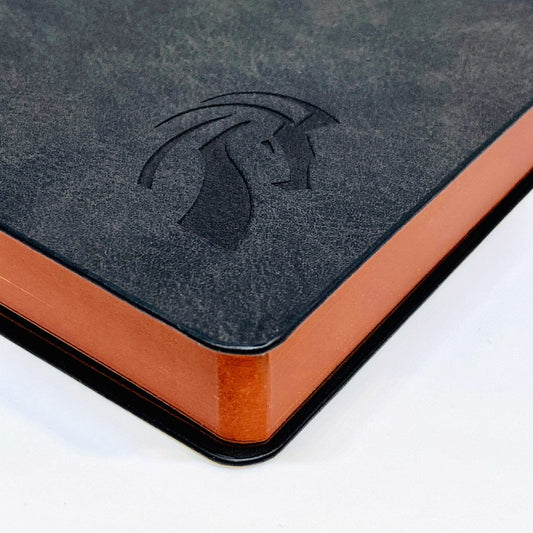
Cover materials include cardboard, plastic, fabric, and PU leather. PU leather is a synthetic material that resists spills and wear. It gives a notebook a professional appearance and is often used on premium journals. The binding holds the pages together and determines how the notebook opens and how many pages it can hold. Common bindings are sewn, stapled, glued, and ring-bound. Sewn bindings are strong and allow the notebook to lie flat. Glued bindings are cheaper but may crack over time. Ring-bound notebooks allow pages to be added or removed but are heavier and less portable. For a notebook that will be carried daily, a sewn or stitched binding combined with a durable cover adds to the lifespan.
LeStallion.com offers premium A5 PU leather lined journal notebooks designed for everyday writing and fountain pen use. The combination of a PU leather cover and sewn binding in a standard A5 size addresses the balance between portability and durability that many users look for in a lined notebook for work and home.
Page count and thickness
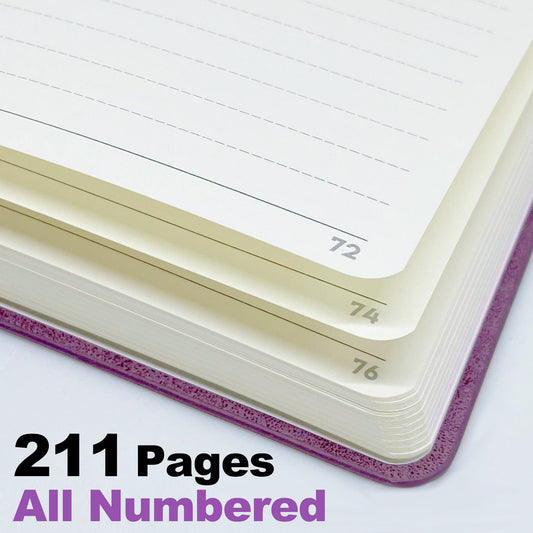
The number of pages in a notebook affects its thickness and how long it lasts. A thin notebook (around 80 to 100 pages) is light and easy to carry but fills quickly. A thick notebook (200 pages or more) provides more writing space but adds weight and bulk. The user should consider how quickly they fill pages and whether they need a notebook that lasts for months or one that can be replaced frequently. Thicker notebooks may not lie flat when open near the middle, which can be an issue for writing on the left-hand page. Some bindings, such as lay-flat sewn binding, reduce this problem.
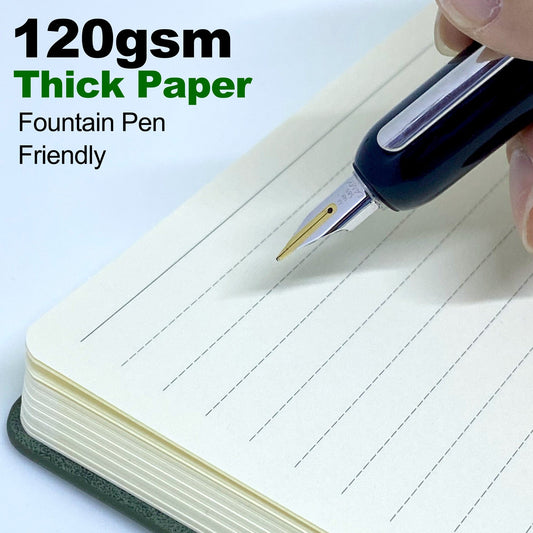
For a notebook used at a desk, a thick hardcover may be acceptable. For a notebook carried in a bag, a slimmer profile is often preferred. The page count also relates to the paper weight: heavier paper (such as 100 gsm or more) reduces show-through from fountain pens but increases the notebook's thickness and weight. Lighter paper (70-80 gsm) keeps the notebook slimmer but may bleed through with wet inks. The choice of paper weight should match the writing instruments the user intends to use.
Lined pages and ruling
Lined notebooks have ruled pages that guide handwriting. The spacing between lines varies. Narrow ruling (6 mm or less) suits small handwriting and dense notes. Medium ruling (7-8 mm) works for most handwriting sizes. Wide ruling (9 mm or more) is easier for larger handwriting or for children. Some notebooks offer dot grid or grid ruling, which provide structure without the strong lines of traditional ruled paper. The user should choose a ruling that matches their handwriting size and the type of content they plan to write. For work notes, medium ruling is common. For journaling or lists, wider spacing may be preferred.
Durable lined notebooks are designed to withstand regular use over time. The paper is often acid-free to prevent yellowing, and the binding is reinforced to resist page loss. The cover material and stitching quality determine how well the notebook holds up to being carried, opened, and written in repeatedly. A notebook with a stiff cover and strong binding will last longer than one with a soft cover and glued spine, but the trade-off is weight and flexibility.
Selecting for specific tasks
Different tasks benefit from different notebook sizes and features. For daily journaling, an A5 size with medium ruling and a durable cover is a common choice. For meeting notes in an office, an A4 or B5 may provide enough space for agendas, action items, and diagrams. For creative writing or sketching, a larger size such as A4 allows more room, while a smaller size like A5 may be more portable for carrying ideas between locations. For list-making or quick notes, a pocket-sized notebook works well. The user should match the notebook size to the typical amount of writing per session and the frequency of use.
Some people use different notebooks for different contexts: a large one for the desk and a small one for the bag. This approach avoids carrying a bulky notebook everywhere while still having sufficient space at the desk. Others prefer a single notebook for everything, choosing a medium size such as A5 that works in most situations. The decision depends on personal workflow and how much the notebook travels.
LeStallion.com produces A5 PU leather lined journals that are built for everyday writing and fountain pen use. These notebooks combine a durable cover with acid-free paper and a binding that allows the notebook to open flat. The A5 size makes them suitable for both home and work settings, and the lined pages accommodate neat handwriting. For users who want a single notebook that can move between environments, this format addresses many of the practical concerns of size, durability, and portability.
Long-term use and replacement
A notebook that is used daily will eventually fill up. The speed at which this happens depends on the page count, the size of the user's handwriting, and how much they write each day. A user who writes several pages daily will fill a 200-page notebook in a matter of months. Someone who writes a page or two per week may make the same notebook last a year or more. The user should consider whether they prefer to replace notebooks frequently or to keep a single volume for a long period. Thicker notebooks last longer but are heavier. Some users prefer to archive filled notebooks and start fresh ones, while others like to have everything in one volume.
The durability of the cover and binding becomes more important the longer the notebook is used. A notebook that will be carried for months needs a cover that resists scuffs, bends, and moisture. A notebook that stays on a desk can have a lighter cover. The user should think about the conditions the notebook will face: a bag that is tossed into a car or a backpack, a desk that may have coffee spills, or a pocket that sees daily friction. The cover material and binding should be chosen accordingly.
Notebook size selection for work and home ultimately depends on the user's writing habits, mobility, and the physical demands of the environment. There is no universal best size. The user who understands how they write, where they write, and how long they need the notebook to last can make a better choice among the available options.
Twitter: https://twitter.com/LeStallion_
