What Makes a Gutter Repair Service Worth the Cost? 92762
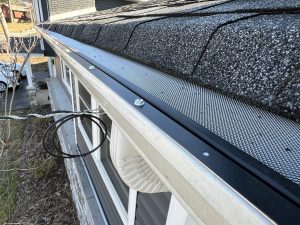
Homeowners rarely get excited about gutters. They notice paint colors, kitchen counters, floors, landscaping. Gutters usually enter the conversation only when something has already gone wrong, a wet basement after a storm, fascia boards starting to rot, a sheet of ice hanging over the front walk, or flower beds carved out by runoff that should have been directed away from the house.
That is exactly why the cost of gutter work gets judged so harshly. On the surface, it can look like a simple job. Tighten a few brackets, patch a leak, clear some debris, move on. But genuinely good Gutter Repair is not just about stopping drips. It is about restoring the water management system that protects the roof edge, siding, soffits, fascia, foundation, walkways, and often the basement or crawlspace below. When that system fails, the damage rarely stays small.
A repair service is worth the cost when it solves the actual problem, prevents the next one, and does the work in a way that holds up through real weather. That sounds obvious, but there is a big gap between a crew that makes a gutter look better for a month and one that leaves the whole drainage line functioning as it should.
The real price of neglected gutter problems
Many homeowners compare a repair estimate to the price of replacement parts and assume the labor is inflated. That comparison misses the bigger picture. Water is relentless, and it exploits small weaknesses faster than most people expect.
A loose section at one roofline can dump dozens of gallons of water in the same spot during a single heavy rain. If the downspout discharges too close to the foundation, or if the pitch is off and water stands in the trough, the damage spreads quietly. Soil gets oversaturated. Mulch washes out. Splashback stains siding. Fasteners loosen further because the gutter carries more weight than it was designed to hold. In colder regions, trapped water freezes, expands, and forces seams gutter repair services apart.
I have seen repairs delayed over what looked residential gutter repair like a minor leak, only for the homeowner to discover soft fascia wood behind the gutter a season later. At that point, the bill no longer covers just Gutter Repair. It includes carpentry, paint, and sometimes pest remediation if moisture has attracted insects. What looked like a few hundred dollars saved turned into a much larger project.
That is one of the clearest measures of value. A good service protects what you do not want to replace next.
A fair estimate starts with diagnosis, not a sales pitch
The first sign that a gutter repair service may be worth its cost is how it evaluates the problem. Experienced technicians do not walk around the house for three minutes, point at a leak, and quote a number from memory. They trace the water path. They look at roof runoff volume, the spacing and condition of hangers, the slope of each section, the integrity of seams and end caps, the condition of the fascia, and the downspout discharge pattern at grade.
Sometimes the visible problem is not the real one. A corner seam that leaks may be doing so because the run is back-pitched and holding water. Gutters that overflow in one spot may be perfectly intact but undersized gutter repair company for a steep roof plane or clogged below the elbow. Repeated separation at a joint may signal movement in the fascia board, not bad sealant.
A service worth paying for explains these relationships clearly. It does not default to replacement gutter downspout repair if repair is practical, and it does not recommend a cheap patch if the assembly is failing more broadly. That kind of judgment is what homeowners are buying. The materials matter, but accurate diagnosis matters more.
Repair quality depends on details most people never see
The visible part of gutter work is easy to notice. The hidden part determines whether the repair lasts.
Take fastening, for example. If a crew simply drives a few new screws into soft or deteriorated fascia, the gutter may look secure when they leave and start pulling away again after the next strong rain. A better repair may involve locating sound backing, adjusting hanger spacing, or replacing compromised sections of wood before remounting the gutter. That takes more time and raises the invoice, but it also changes the outcome.
Pitch is another detail that separates durable work from temporary work. Gutters need enough slope to move water efficiently toward downspouts, but not so much that they look visibly uneven from the ground. Achieving that balance on an older house, where rooflines and fascia are not perfectly straight, requires patience and a trained eye. It is one reason the same linear footage can be easy on one home and frustrating on another.
Sealants are often misunderstood as well. People think a leak can always be solved with more caulk. In reality, sealant fails when it is used as a substitute for proper mechanical alignment, clean surfaces, and stable joints. An experienced repair crew cleans and prepares the area, re-secures the connection if needed, and applies the right product in the right conditions. They know when seam repair is realistic and when the section should be replaced.
These details rarely show up in a quick online price comparison. They show up six months later when the repaired system either survives repeated storms or starts dripping again.
Labor is a big part of the value, and for good reason
Gutter work can look routine from the driveway. It is not always routine from a ladder.
Even a straightforward repair may involve working at height near roof edges, on uneven ground, around landscaping, over porches, or above hard surfaces where footing is less forgiving. Add multi-story homes, steep grades, power lines, slate or metal roofs, and weathered trim, and the job becomes much more technical. Skilled labor is not just about attaching metal. It is about doing that safely, cleanly, and without damaging nearby materials.
There is also a difference between general handyman labor and specialized gutter labor. Someone who works on drainage systems every day notices patterns others miss. They know the weak points common to sectional aluminum systems, how copper behaves differently, why certain hanger styles perform better in snow country, and how to correct recurring overflows caused by valley runoff. That familiarity shortens the learning curve on your house.
A homeowner is not paying only for the hours on site. They are paying for fewer callbacks, fewer avoidable mistakes, and less risk of injury or property damage during the repair.
The best repair services think beyond the gutter itself
One of the most common mistakes in this trade is treating the gutter as an isolated strip of metal. In practice, it is one component of a broader water control system.
A service worth the cost looks at where the water goes after it leaves the gutter. If downspouts dump directly at the foundation, fixing a leaking seam is only part of the answer. If the roof sheds unusually heavy volumes into one inside corner, a larger outlet or added downspout may be justified. If the gutter guard system is causing debris to bridge over the opening instead of entering the trough, the repair may involve modifying or removing that cover rather than simply cleaning the line again.
This systems view often saves money over time because it addresses repeat failures. I once spoke with a homeowner who had paid for annual spot repairs at the same rear corner of the house. Every storm sent water over the edge and onto a patio door threshold. The problem was never the seam itself. It was a combination of insufficient pitch and too much water concentrated by a roof valley. Once the run was adjusted and drainage capacity improved, the repeated service calls stopped.
That is the kind of result that makes the cost feel justified. The service ends the cycle instead of extending it.
What reliable workmanship actually looks like
Homeowners often ask how they can tell whether a proposed repair is solid before agreeing to it. There is no perfect shortcut, but there are strong indicators.
A worthwhile company usually does several things consistently:
- It explains what failed and why, in plain language.
- It distinguishes between immediate repairs and optional improvements.
- It specifies whether sections will be resealed, re-pitched, re-hung, or replaced.
- It mentions surrounding conditions such as fascia rot, downspout discharge, or clogs if those affect performance.
- It stands behind the work with a clear workmanship warranty.
None of this guarantees excellence, but vague language is a warning sign. “We’ll fix it up” is not a scope of work. Good contractors know what they are doing, and they can describe it.
Cheap repairs often cost more because they ignore the cause
The least expensive bid can be a smart buy, but only if it covers the right solution. Too often, low quotes are built around the fastest visible fix. A smear of sealant over a failing seam. A couple of replacement screws where the backing is rotten. A quick cleaning when the downspout itself is partially blocked or crushed at the base.
Those repairs are attractive because they are affordable and immediate. They are also easy to repeat, which is exactly the problem. If a service call resolves symptoms for a few weeks and then the overflow returns, the homeowner has not saved money. They have paid for delay.
This is especially true in climates with freeze-thaw cycles or heavy seasonal storms. Weak repairs get exposed quickly. Standing water becomes ice. Loose sections pull harder on fasteners. Small leaks darken wood trim and start the slow process of deterioration. By the time a homeowner realizes the earlier fix did not hold, more components may need attention.
A repair service becomes worth the cost when it reduces future spending, not simply when it offers the lowest upfront number.
Material matching matters more than many people realize
Not all gutter systems age the same way, and not all repairs should be approached the same way. Aluminum, galvanized steel, copper, and vinyl each have their own strengths and limitations. Even within aluminum systems, the gauge, profile, and age of the components influence repair options.
A service that knows how to match material properly can preserve both appearance and performance. On visible front elevations, a mismatched section can look awkward from the street. More important, incompatible materials or poorly chosen fasteners can accelerate corrosion or create weak connection points.
Older homes present another challenge. A technician may be dealing with discontinued profiles, custom miters, or fascia that has moved out of alignment over time. In those cases, the value lies partly in problem-solving. Can the damaged area be rebuilt without replacing an entire elevation? Can a custom piece be fabricated to preserve the look of the house? Can the pitch be corrected while keeping the line visually clean?
These are not commodity decisions. They require experience, and experience costs money for good reason.
Good communication is part of the service, not a bonus
Homeowners tend to focus on the physical repair, but communication has real value too. Water problems create anxiety because they can affect several parts of the home at once, and many people do not know how serious a gutter issue really is.
A professional service respects that uncertainty. It shows up when scheduled or gives notice if timing changes. It documents what it found. It points out issues that need attention now versus later. It does not manufacture urgency, but it does not minimize risk either.
This matters even more when repairs reveal hidden damage. If a crew removes a loose gutter and discovers that the fascia behind it is soft, the next steps should be explained clearly. Can the repair proceed safely? Does a carpenter need to be involved? Is this a localized problem or part of a larger moisture pattern? Homeowners deserve answers before costs expand.
The service experience shapes whether the bill feels fair. People will usually accept a realistic price when they understand the work and trust the judgment behind it.
When repair is smarter than replacement, and when it is not
A trustworthy contractor does not treat every old gutter as a candidate for full replacement. Many systems can be restored effectively if the metal is still sound and the failures are localized. Rehanging loose runs, correcting pitch, resealing key joints, replacing selected sections, and improving discharge can add meaningful life at a fraction of replacement cost.
But there are limits. If the system has widespread corrosion, repeated seam failures, multiple sagging runs, chronic overflow from undersizing, or extensive fascia damage, piecemeal work may become false economy. The right service will say so. That honesty is often one of the strongest signs that a company is worth hiring.
Here is a useful way to think about it:
- Repair makes sense when the structure of the gutter is mostly sound and the problems are specific.
- Replacement makes more sense when defects are widespread, the design is inadequate, or repairs would be repeated often.
- A hybrid approach can be best when one elevation has failed but the rest of the house is still in good condition.
There is no universal rule because houses age differently. A north-facing run shaded by trees may degrade faster than a sunnier side of the same home. One downspout line may be undersized while the rest are fine. Good judgment beats blanket advice every time.
Regional conditions change what “worth the cost” means
The value of Gutter Repair is tied closely to climate and site conditions. In dry regions with occasional storms, a homeowner may tolerate minor cosmetic wear for a while. In areas with frequent rainfall, snow load, or ice buildup, small defects become more urgent.
Tree cover matters too. Homes surrounded by pine, oak, or maple tend to deal with recurring debris, organic staining, and hidden clogs. Coastal homes face salt exposure and wind-driven rain. Houses on steep lots often need especially careful discharge management because water gains momentum quickly once it leaves the downspout.
This is why broad national pricing advice can be misleading. A fair price in one area may be unrealistic in another, either because labor costs differ or because the repair itself is more demanding. A second-story corner repair over a conservatory roof is not equivalent to a first-story front run above a flat driveway.
Worth is contextual. The best contractors price based on the actual site, the real risks, and the work needed to leave the system dependable.
The service should leave you with fewer unknowns
One of the clearest signs of value is that, after the job, the homeowner knows more than before. Not just that the leak is sealed, but why it happened, what was done, how long the repair should reasonably last, and what to watch for next season.
That confidence has practical value. If another issue appears later, the homeowner can describe it accurately. If a different trade becomes involved, such as roofing or fascia repair, there is a clearer record of how the drainage system was addressed. If the house is sold, proper maintenance history supports the condition of the property.
The opposite experience is common with rushed work. The gutter stops dripping for now, but no one explains whether the pitch was corrected, whether the fasteners hit solid backing, or whether the downspout line is still partially obstructed. The homeowner is left hoping rather than knowing.
Hope is not what people should be paying for.
What homeowners are really buying
At its best, Gutter Repair is not a minor maintenance expense. It is risk control. It protects the envelope of the house, preserves finishes that are expensive to restore, and prevents moisture from taking hold where it should not.
The service is worth the cost when the contractor can recognize the difference between a nuisance leak and an early warning sign, when the repair method fits the condition of the system, and when the work holds up after the ladders are gone. It is worth the cost when the estimate reflects diagnosis, safety, material knowledge, and weather-tested workmanship rather than a quick cosmetic fix.
People sometimes assume they are paying a lot for a strip of metal near the roofline. What they are really paying for is control over where water goes, and what it does not get the chance to damage. On a house, that is rarely money wasted.
Just Gutters LLC
262 Main St
Hackettstown, NJ 07840, United States
Phone: +1 201-331-9454
FAQ About Gutter Repair
Is it cheaper to repair or replace gutters?
Repair can cost less when damage is limited and the remaining system is sound. Replacement may offer better value when leaks, corrosion, or repeated failures affect several sections. An inspection and written estimate can help compare the options.
Can damaged gutters be repaired?
Many localized problems, including leaking joints, loose brackets, sagging sections, and damaged downspout connections, can be repaired. The best approach depends on the material, extent of damage, and condition of the mounting surface.
Can I repair gutters myself?
Simple ground-level checks may help identify a problem, but roof-edge work carries fall risks and may require specialized tools. Professional assessment is advisable for high gutters, loose sections, hidden wood damage, or uncertain drainage problems.
